
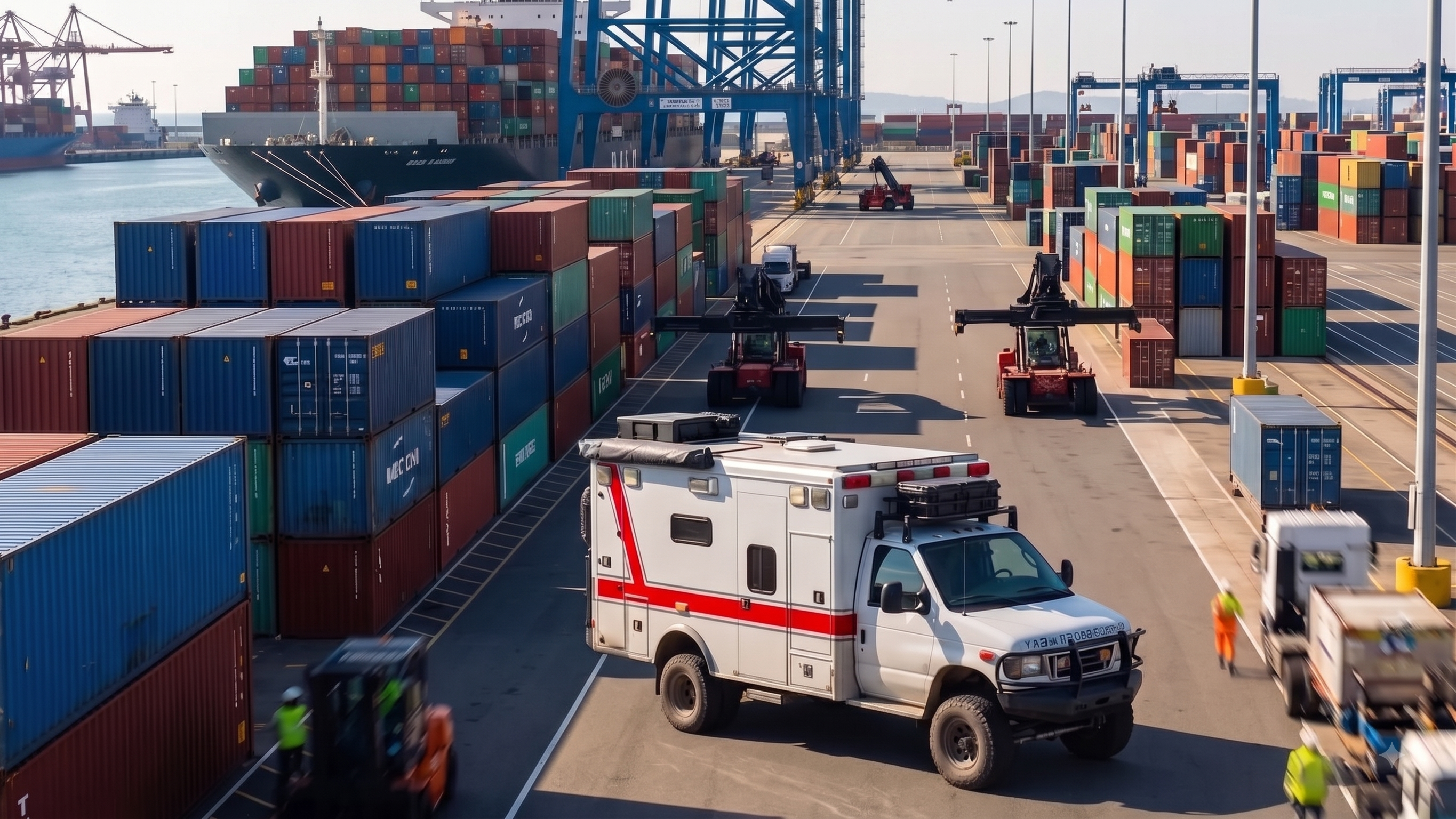
Handing over the keys to your home-on-wheels and watching it embark on an ocean voyage across the Atlantic can feel overwhelming. However, once you break down the logistics, paperwork, and preparation steps, shipping your vehicle across the pond is far more straightforward than it seems.
If you are planning to travel around Europe for a longer period (generally longer than 3 to 6 months), shipping your own rig often makes far more financial sense than renting a motorhome locally.
Key decisions & logistics
1. Choose your shipping method
- Roll-On/Roll-Off (RORO): The most common option for oversized vehicles like campervans, ambulances, and RVs. A port driver literally drives your vehicle onto the ship deck and drives it off at the destination.
- Container Shipping: Ideal for standard-sized vans or smaller overland rigs that can fit inside a standard cargo container. You drive the vehicle in, lock it up, and nobody accesses it during transit.
- Flat Rack: An open-sided container platform used for oversized vehicles that cannot fit in standard containers. While your vehicle remains locked, it is exposed to sea spray and salt air during transit.
- Why we chose RORO: For our oversized DIY ambulance camper, RORO was the only practical choice.
2. Select a shipping broker
- SeaBridge (Our recommendation): Provided detailed itemized breakdowns, step-by-step port logistics guidance, clear documentation support, and prompt customer service.
- IVSS: Another reputable broker operating globally. However, we didn’t have great customer service from them.
- Why use a broker: Shipping carriers rarely deal directly with individuals. Using an established broker streamlines all documentation and port communications.
3. How Are RORO Camper Shipping Costs Calculated?
- Volume over weight: RORO shipping is calculated using total cubic meters (Length x Height x Width) rather than total weight.
- Pro Tip — Measure outer dimensions carefully: Fold in side mirrors to trim total width.
- Pro Tip — Consider roof accessories: Leaving storage boxes bolted to our roof added 12 inches of height, which added roughly $500 to our shipping total. Removing optional roof gear before shipping can save money.
How Much Does It Cost to Ship a Camper from the US to Europe?
Here is our exact cost breakdown for shipping our rig from Baltimore, Maryland to Antwerp, Belgium:
- Ocean Freight (SeaBridge): $4,564.58 (based on 62.2 m³ volume and 6,600 kg weight)
- Marine Insurance: ~$920.00 (€850 based on vehicle valuation)
- Baltimore Port Escort Fee: $75.00
- Forwarder & Port Charges: $300.00
- Total Estimated All-In Expense: ~$7,000.00
RORO Vehicle Preparation Rules (Batteries, Propane & Fuel)
Preparing your vehicle for drop-off
- “Clean Counter” Policy: The interior must look neat and largely empty. Cabinets and garage compartments should be securely packed, but living spaces must remain clear.
- Remove High Valuables: Keep cameras, laptops, and irreplaceable personal items in your carry-on luggage.
- Lithium House Batteries: Permanently mounted/bolted lithium house batteries are permitted, but loose/portable lithium batteries (e.g., power tools, ebikes) must be transported separately.
- Propane / Gas Tanks: Propane tanks must be completely empty with valves left open. Note: Returning to the US from Europe often requires an official empty-tank certification.
- Fuel Level: Keep your fuel level at 1/4 tank or less upon arrival at the port.
Port drop-off & transit
- Bring essential paperwork: Have your vehicle title, registration, proof of insurance, and passport ready.
- Hire a port escort: In ports like Baltimore, an official escort will guide you through security, forwarder offices, customs clearance, and final key handoff.
- Drop-off buffer time: Plan to drop off your vehicle up to 1 week prior to the ship’s departure date.
- Track your vehicle in real-time: Hide GPS tracking tags (Samsung SmartTags or Apple AirTags) inside your vehicle, and track the ship across the Atlantic using MarineTraffic.com. Transit from Baltimore to Antwerp took roughly 2 weeks.
Picking up in Europe
- Coordinate arrival timing: Fly over a few days before arrival to avoid port storage fees, but keep Schengen Zone 90-day visa limits in mind.
- Mandatory European Insurance: Standard US auto policies do not cover Europe. You will need third-party liability insurance (we used TourInsurer) to legally drive away from the port.
- License Plates: Port inspectors will check that you have front and rear license plates attached. Because plate theft occasionally occurs during ocean transit, consider stashing plates inside during shipping and mounting them right before pickup.
- Photo & Video Evidence: Record thorough photos and video inside, outside, and on top of your vehicle right before drop-off and immediately upon pickup to back up any insurance claims if damage occurs.
Need to know
Shipping your vehicle across the ocean can be a nerve-wracking process, but breaking down the steps makes it completely manageable. Once you pick up your keys in Europe, having your own rig opens up a whole new level of international overland travel and adventure.
Full Walkthrough Video
For a complete walkthrough of our experience shipping our DIY ambulance camper across the Atlantic, check out our full video guide embedded below!
- Watch on YouTube: How to Ship a Camper to Europe from the US (RORO Logistics & Costs)